Research
My work is at the interface of bioinformatics and structural biology. The question that ties these themes together is easy to state and hard to address: what can we learn from a protein’s structure that its sequence alone does not tell us?
Structure is far more conserved than sequence. That conservation is a resource — for reconstructing deep evolutionary histories, for annotating sequences with no known homologue — but it is only usable if we understand how structures themselves evolve. Unlike sequences, proteins have no established model of structural evolution. That gap organises everything below.
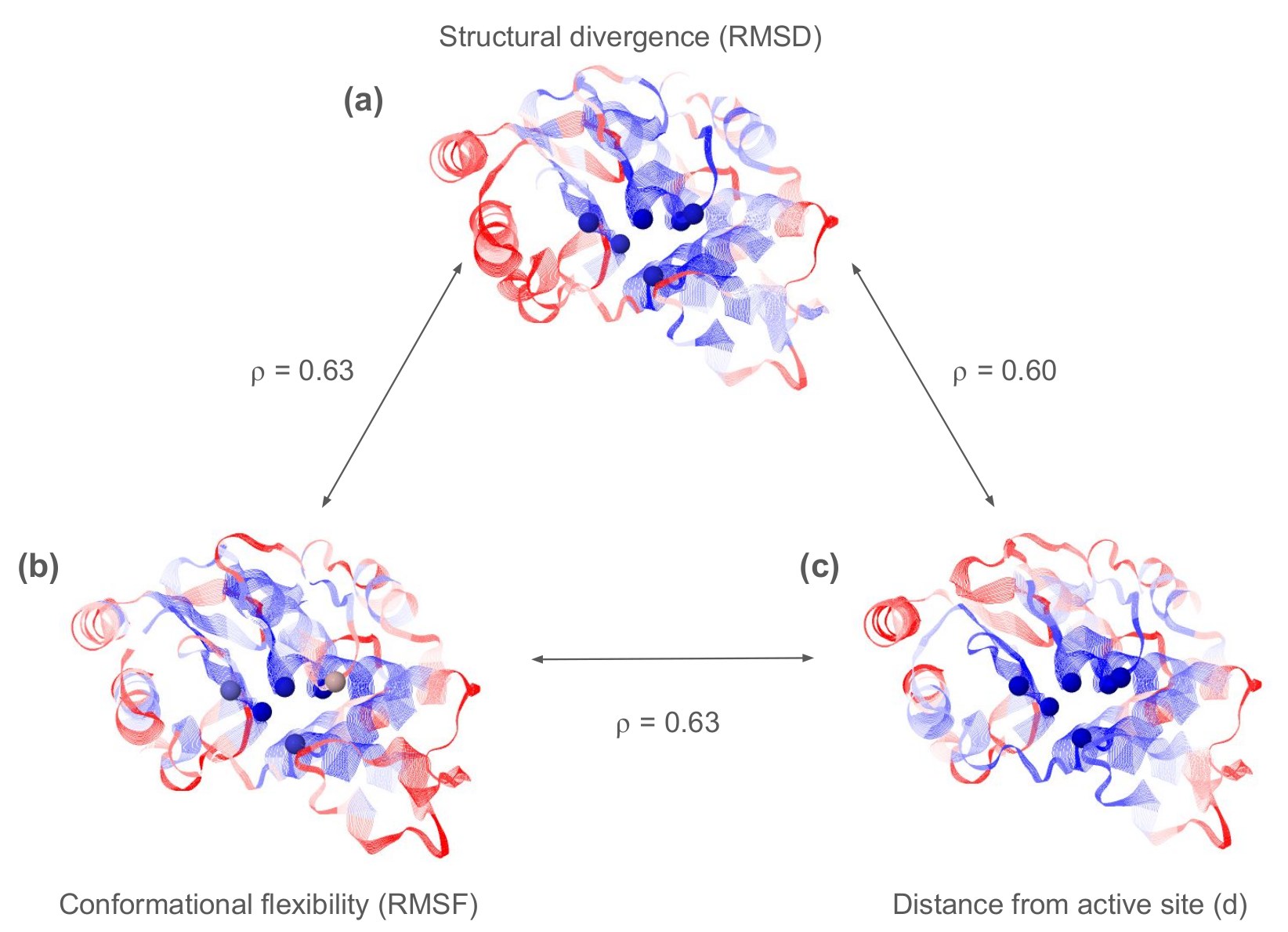
Structural evolution
Protein structures diverge as sequences do — but not uniformly. What sets the rate at which each residue’s position drifts over evolution?
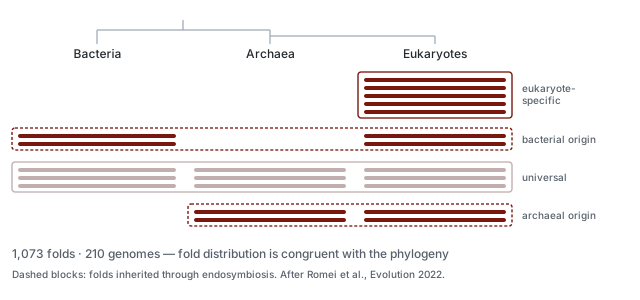
Protein folds as phylogenetic characters
The number of known folds is in the order of a few thousand, far fewer than expected give the size of the sequence space. Are they reliable markers of common ancestry, or does evolution keep converging on the same shapes?
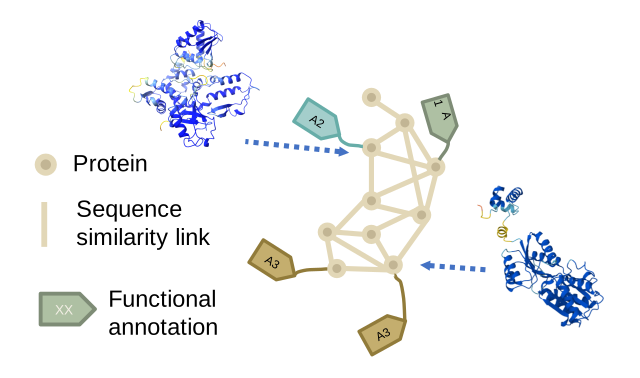
Annotating the unknown in meta-omics data
Much of what environmental sequencing returns is too divergent for annotation transfer to work. What can we say about dark proteins using sequence similarity networks? Can structural conservation recover the signal that sequence similarity loses?
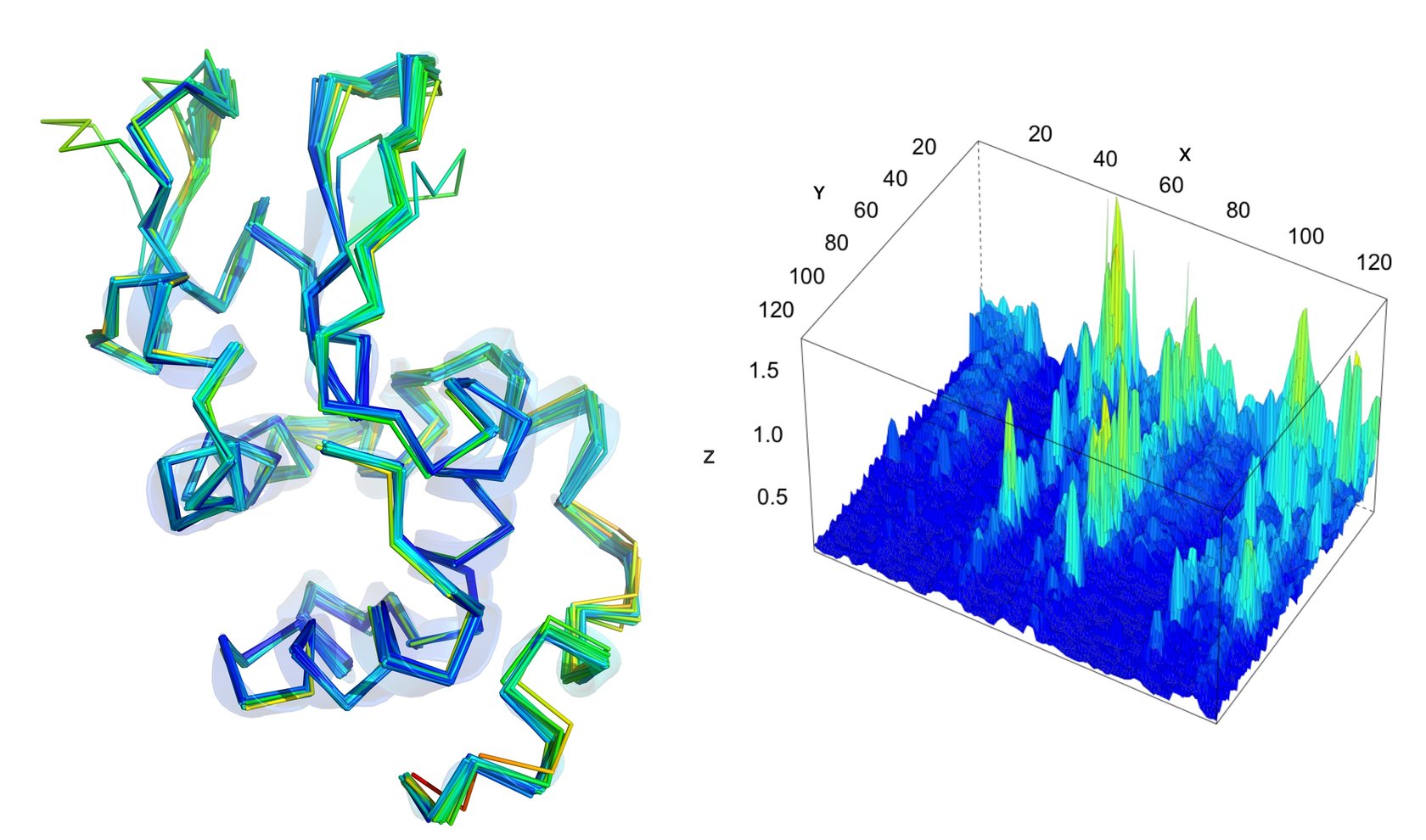
The structural effect of point mutations
A single substitution moves a structure — but so does changing the buffer. How do we tell a genuine mutational effect from the molecule’s own flexibility?
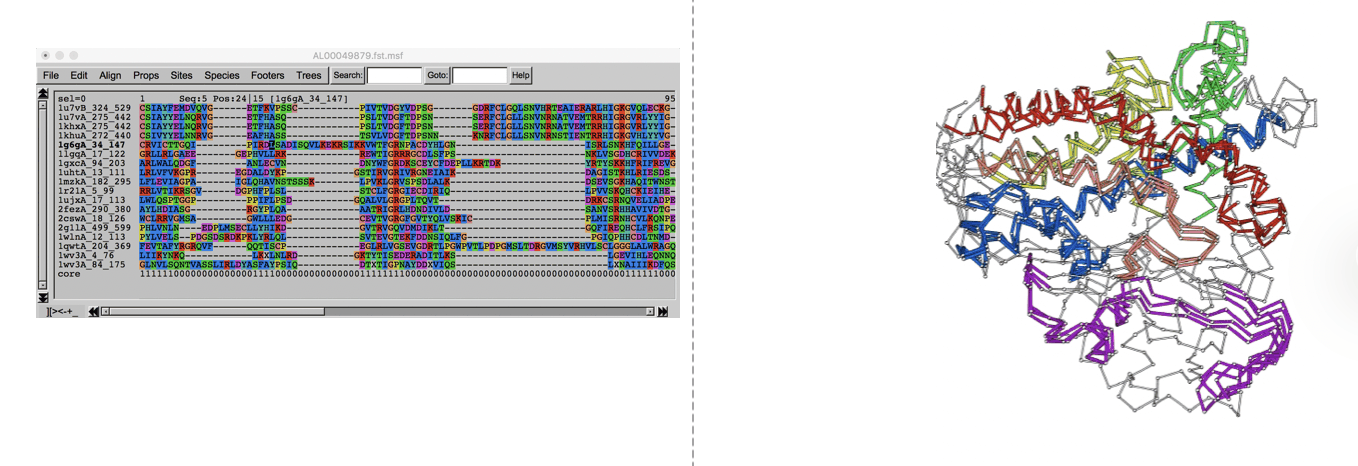
Structure alignment and classification
Is structure aligning better than sequence? Is it possible to combine the two? How should complementary signals be combined?